 Skip to content
The Essential Guide to the Maasai People
Table of Contents
Picture yourself standing on the golden plains of Africa with the vast expanse of the Maasai Mara before you. A group of tall figures, wrapped in bright red cloth, walks across the horizon, their faces calm and their steps slow. This is your first sight of the Maasai, a semi-nomadic Nilotic tribe whose spirit is as wild and beautiful as the animals they live among.
You’ve seen them in documentaries or photos but trust me, nothing beats experiencing it firsthand. They’re not an attraction, they’re the land itself. Their story is one of tradition, resilience, and an unbreakable bond with the natural world. Let’s peel back the layers and discover the fantastic world of the Maasai of Kenya and Tanzania.
Culture & Society: A Fabric of Tradition
The Maasai social system is a complex web that guides every person from birth to old age. It’s a structure that’s both rigid and flexible, so everyone knows their place and purpose.
Social Structure: The Age-Set System
At the heart of Maasai society is their excellent age-set system. This is the foundation of their community, where leadership and wisdom are passed down from one generation to the next. For men, life is divided into distinct, ceremonially-marked stages:
- Boyhood: A young Maasai boy’s life begins with learning from his family and community. His days are spent learning to herd cattle and become one with the land.
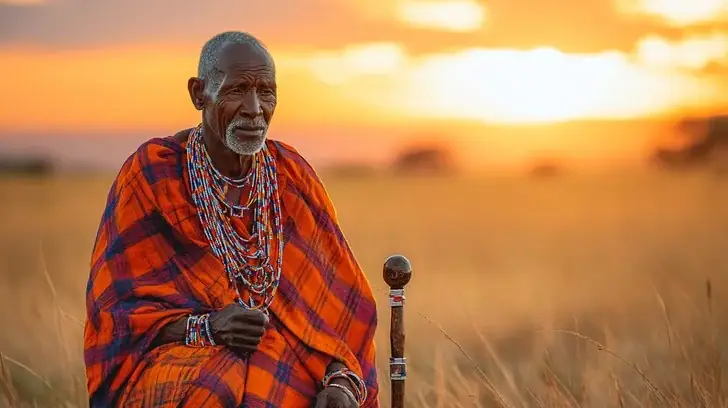
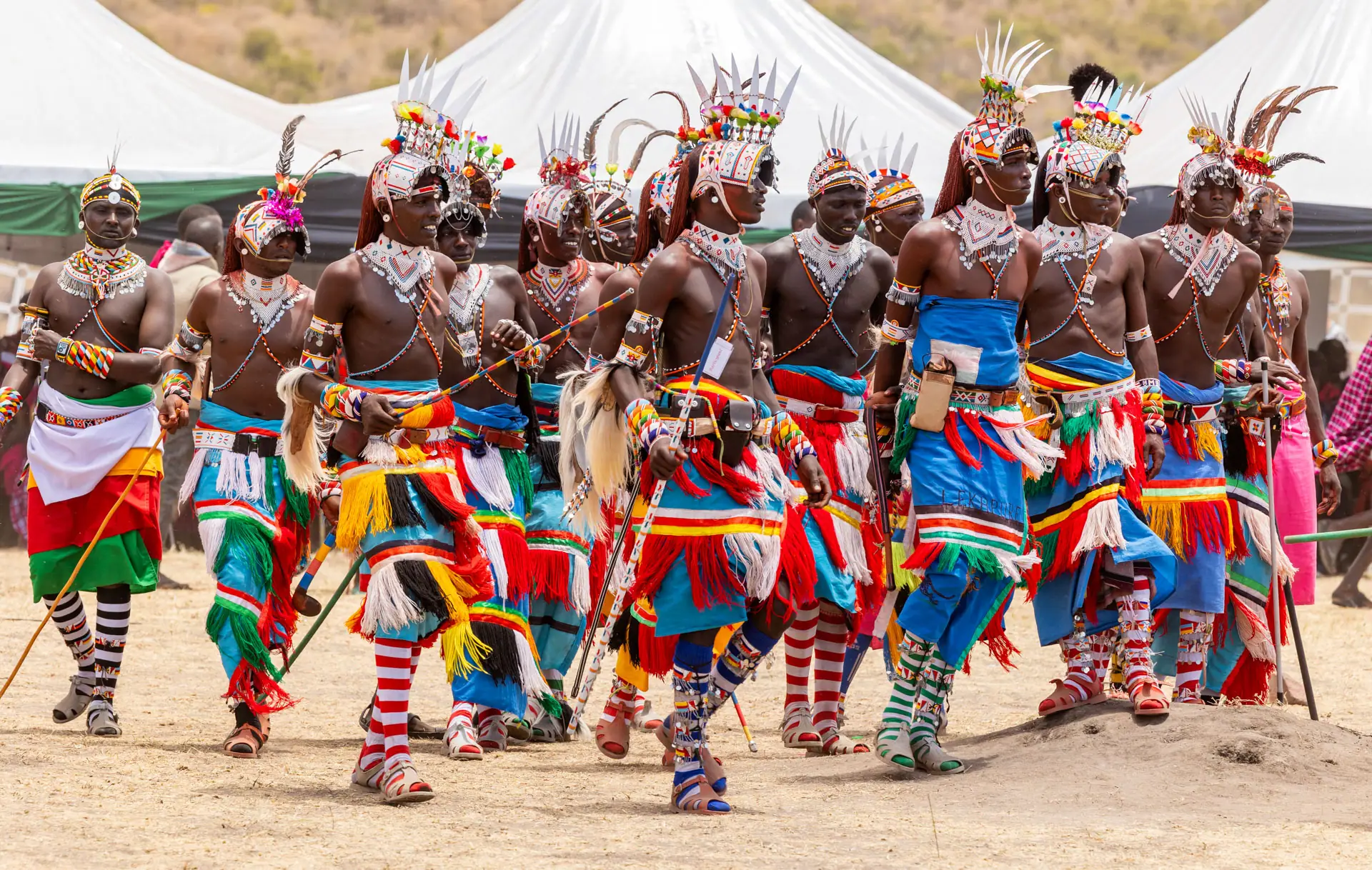
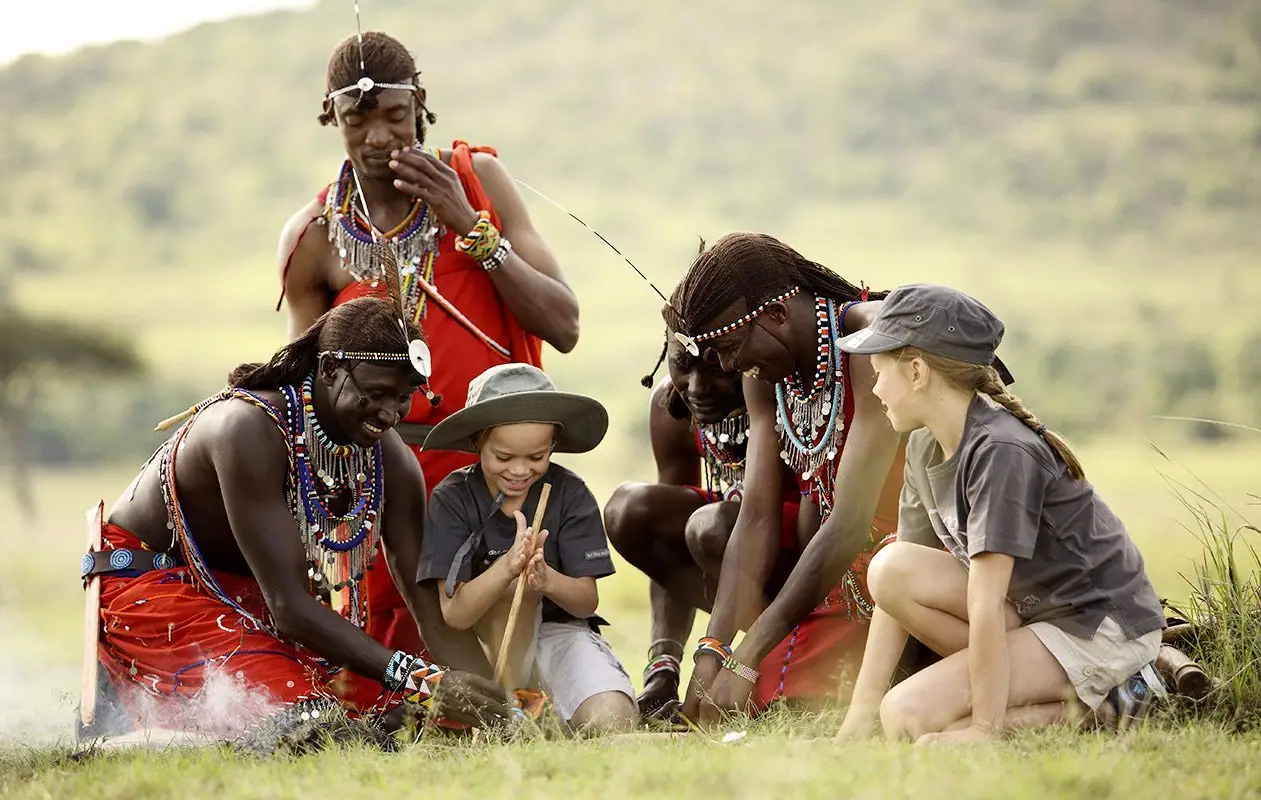
- Moran (Warrior): This is the stage everyone loves. After a big circumcision ceremony, boys become moran, or young warriors. Their job is to protect their family, their cattle, and their land. You can’t miss them – they have long, ochre-braided hair and red shukas, symbols of their bravery.
- Junior Elders: As the moran grow up, get married, and take on more responsibilities, they become junior elders.
- Senior Elders: These are the pillars of the community. They have a lot of respect and influence, making big decisions, settling disputes, and upholding the old laws of the Maasai tribe.
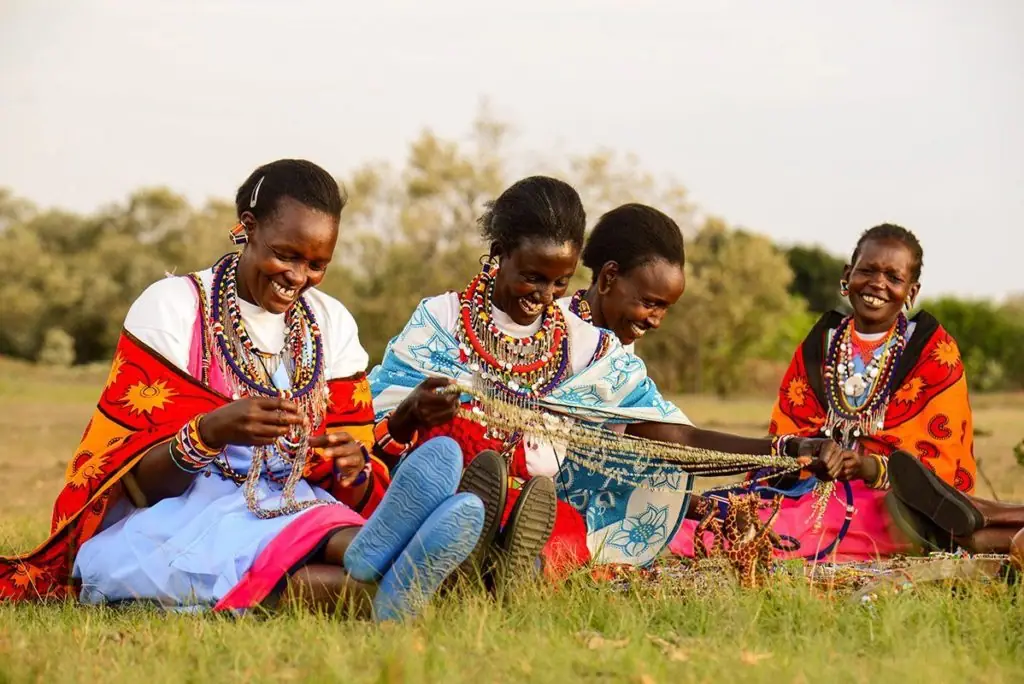
Women have their own roles that are tied to marriage, family, and the beautiful art of Maasai beadwork.
Religion and Beliefs: The Way of Engai
Did you know the Maasai believe in one god, Engai (or Enkai)? Engai comes in two forms: Engai Narok, the Black God, who is kind and brings life-giving rains, and Engai Nanyokie, the Red God, who can be vengeful and brings drought.
The sky itself is the home of Engai. The Laibon are spiritual leaders, the link between the people and their god. They give blessings and guidance and are highly respected.
Traditions and Rituals: Marks of Identity
Maasai life is a series of ceremonies and rituals that bind the community together and define who they are.
- Adumu (The Jumping Dance): You have to see this to believe it! The Adumu, or jumping dance, is a fantastic display of strength and agility by the moran. They jump straight up in the air with incredible grace, a test of physical strength and endurance. It’s often part of celebrations and a welcome to guests.
- Circumcision: This is the rite of passage. For boys, it’s a test of courage as they become warriors. It’s a moment of no fear.
- Body Modification: The Maasai have a long history of body modification. They pierce and stretch their earlobes, adorning them with beautiful beadwork. It’s a cool tradition.
I still get chills thinking about my first time watching a Maasai ceremony. There was a young man, no more than 18, standing before his elders, his face a mask of concentration. He was about to go through his rite of passage. The air was electric, and as the elders started to chant, the young man’s face changed from fear to pure intent. It was a decisive moment that revealed the strength and conviction behind their traditions. You can’t read about this in a book; you have to feel it in the moment.
Lifestyle and Daily Life: Living in Harmony with the Land
The Maasai way of life is deeply connected to the plains of East Africa and their most prized possession: cattle.
Pastoralism and Cattle: The Pulse of Life
The Maasai of Tanzania and Kenya are true pastoralists. Cattle aren’t just food for them; they are wealth, status, and a spiritual connection to Engai. Their whole life revolves around herding, finding water, and pasture, which shape their semi-nomadic lifestyle. Every part of the cow is used, from milk and meat to hides for clothing and shelters.
Diet: Food from the Herd
The traditional Maasai diet is almost entirely from their cattle. Milk is a staple, and meat is eaten during ceremonies. A fascinating and unique aspect of their diet is cow’s blood, which is collected without harming the animal and often mixed with milk to enhance its nutritional value. As their world changes, they’ve started to incorporate foods like maize meal and rice, but their diet remains deeply connected to their livestock.
Housing: The Manyatta
A Maasai village is called a manyatta. A thorn bush fence surrounds these circular settlements. The Maasai homes, called enkaji, are built by the women using sticks, mud, grass, and cow dung. They’re surprisingly strong and a cool escape from the sun.
Arts & Adornments: A Living Language of Color
For the Maasai, what they wear isn’t just about looking good; it’s a way to express who they are, their status, and their cultural pride.
Clothing: The Shuka
The most iconic piece of Maasai clothing is the shuka. This colorful cloth is wrapped around the body. Red is the dominant color, meaning bravery and strength, but you’ll also see blue (for the sky), green (for the land), and black (for the people). Both men and women wear shukas, each with their own style.
Beadwork and Jewellery: Stories in Strands
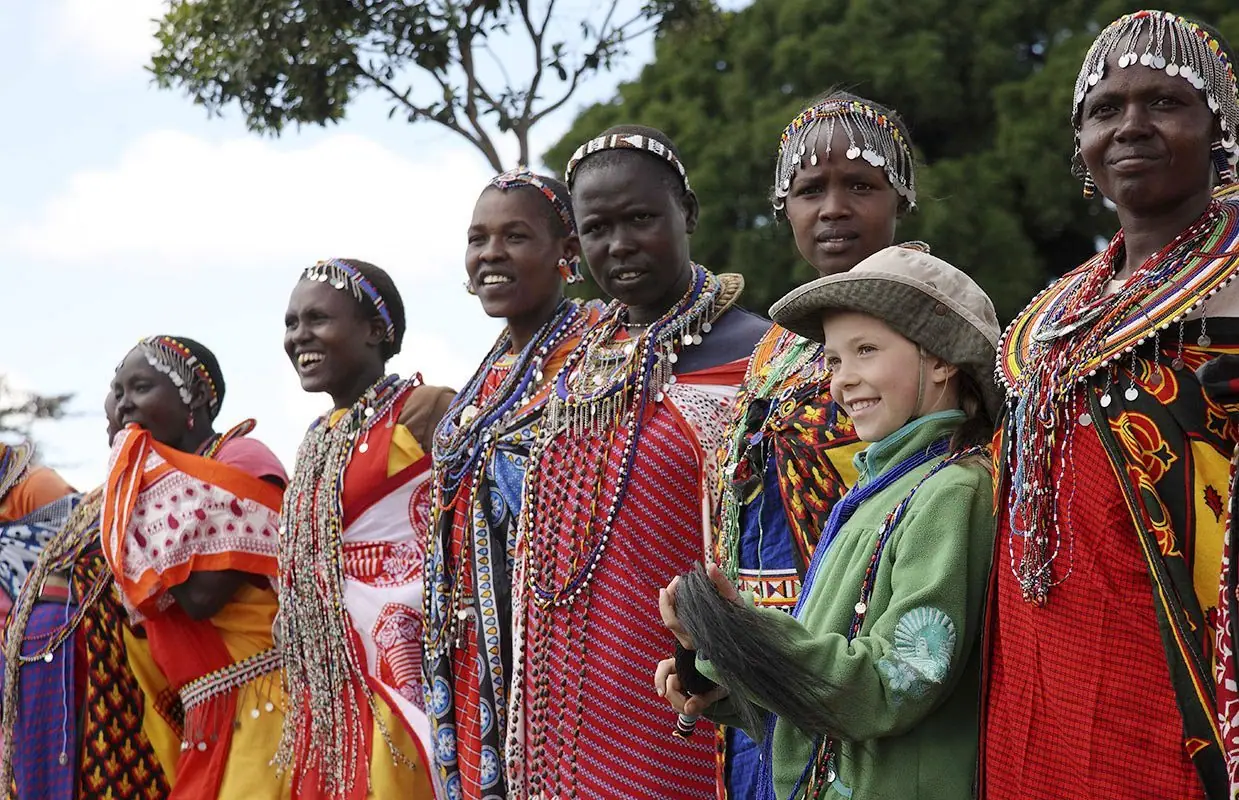
Maasai beadwork is famous worldwide for its intricate designs and colors. You’ll see beautiful necklaces, bracelets, earrings, and anklets on almost every Maasai person. But these aren’t just accessories – they are a form of storytelling.
- Colors: Every color has a meaning. Red represents bravery, blue symbolizes the sky, green represents the land, yellow signifies hospitality, white represents peace, and black represents the challenges the Maasai people have overcome.
- Patterns: The patterns and designs can reveal a person’s age, social status (married or unmarried), or even their family’s lineage. This is a testament to the skill of Maasai women.
A friend of mine who took one of our tours bought a handmade beaded necklace and asked the woman who sold it to him what the pattern meant. She told him it was the story of her family’s cattle herd. The blues and greens represented the grass and water they found, while the one red bead symbolized a young warrior in the family. It’s remarkable how much history can be woven into a single piece of jewelry.
The Maasai Today: Adapting to the 21st Century
The Maasai aren’t just a relic of the past; they are a living, breathing culture adapting to the 21st century while holding on to their core identity.
Modernization vs. Tradition:
It’s a balancing act for the Maasai. More young people are getting an education and even moving to cities, but there’s a strong community-wide effort to preserve their language (Maa) and traditional knowledge.
We’ve seen firsthand how many Maasai have blended modern life with their ancient customs, from using cell phones to arrange cattle sales to running local businesses.
Conservation and Tourism: A Complicated Business
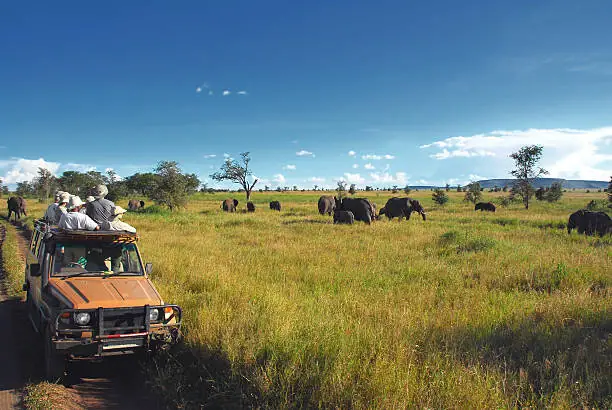
The Maasai live alongside some of the world’s most incredible wildlife in places like the Maasai Mara and Amboseli National Park. Their traditional way of life has long been intertwined with these animals.
- Conservation: The Maasai are becoming key partners in conservation efforts. Their deep knowledge of the land is invaluable. Many communities are now involved in conservancies that protect both the wildlife and their way of life.
- Tourism: Cultural tourism is a vital source of income. Visiting a Maasai village is a great way to learn about their way of life. But we’re cautious to ensure these experiences are authentic and that the profits go directly to the local community.
The first time I organized a community visit, the Maasai’s generosity and warmth blew me away. They didn’t see us as tourists; they saw us as visitors in their home. They welcomed us with a traditional song and told us stories about their history. We sat in a circle and listened, feeling a deep connection to a way of life so different from our own. It was humbling and reinforced the importance of responsible tourism.
Land and Livelihood: The Big Challenges
Over the years, the Maasai have lost a significant portion of their traditional grazing land to national parks, farming, and development. This has a substantial impact on their semi-nomadic lifestyle and ability to care for their cattle.
We support organizations that work to secure Maasai land rights and ensure their culture is sustainable for generations to come.
Frequently Asked Questions (FAQs) About the Maasai
Got questions? We’ve got answers. Here are a few of the most common ones we get:
- What are the Maasai famous for? Maasai are famous for their red shukas, the Adumu jumping dance, warrior traditions, beadwork, and their pastoralist lifestyle centered around Maasai cattle.
- What language do the Maasai speak? Maa. Many also speak Swahili and English due to tourism and education.
- Are the Maasai people friendly? Yes! They are known for their hospitality and welcoming nature, especially if you show respect for their culture and traditions.
- What do Maasai warriors eat? Traditionally, Maasai warriors get their strength from a diet of milk, blood, and meat from their cattle.
- What is a Maasai village called? A manyatta.
- What is the Maasai jumping dance? The Adumu is a ritual dance performed by Maasai warriors. They jump straight up high into the air as a display of strength and agility.
- What do the colours of Maasai beads mean? Every colour tells a story: red is for bravery, blue is for the sky, green is for the land, yellow is for hospitality, white is for peace, and black is for the hardships they’ve overcome.
A Legacy of Resilience and Pride
The Maasai people are a living embodiment of strength, cultural pride, and connection to the land. From the bright colours of their clothes to the powerful beats of their dances, their traditions are awe-inspiring.
They are the custodians of the savannah and the guardians of a heritage that is as old as the land itself. Their story isn’t a museum piece; it’s a living, breathing narrative you can be a part of.
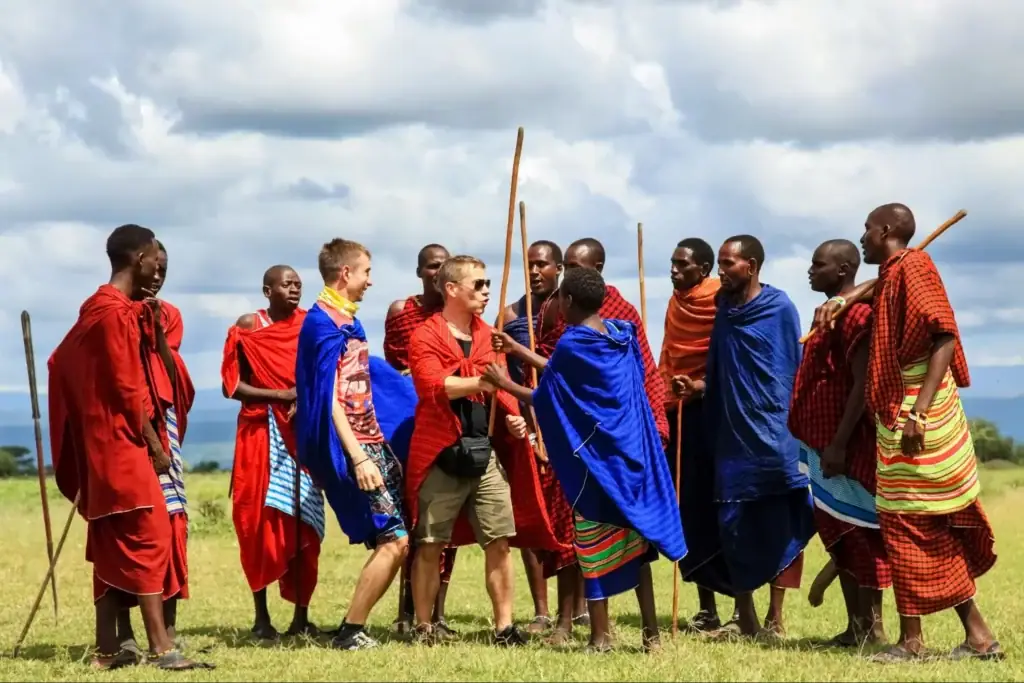
Maasai People in Maasai Mara
The Maasai are the dominant ethnic group in the Maasai Mara National Reserve and its surrounding conservancies. While exact numbers are difficult to obtain due to their nomadic lifestyle, over a quarter of a million Maasai people reside in the greater Maasai Mara ecosystem.
The population is growing, with a large youth demographic. A recent study revealed that approximately 60% of the Maasai population is under the age of 25. The Maasai in the region have a high fertility rate, which contributes to their population growth but also presents challenges for land management and resource sharing.
Literacy rates are improving, with more children, including girls, attending school; however, they still lag behind the national average. Overall, the population is a mix of traditionalists and modernists, creating a unique demographic in the region.
About Harrison
My name is Harrison, and I am a passionate tour consultant at AJ Kenya Safaris. For years, I have been privileged to help travellers from all over the world discover East Africa. My goal isn’t to book you a trip; it’s to create an unforgettable, life-changing experience.
I believe in responsible, authentic tourism that respects local cultures and gives back to the communities we visit. When I am not planning safaris, you can find me exploring Kenya’s hidden gems and spending time with my family. Come say hi and let me help you plan your dream adventure!
Other Information About Masai Mara and Conservancy:


Welcome to AjKenya Safaris
Thanks for stopping by! We’re excited to help you plan an unforgettable safari.
- Phone: +254 748 258880
- WhatsApp: +254 748 258880
- Email: [email protected]
- Email: [email protected]
